We're here to help in Vancouver —
(604) 857-5779

How to Write an Obituary: A Practical Guide for Families
Image by Unsplash / Sandy Millar
Need help right now? We're here 24/7.
Writing an obituary is one of those tasks that most families have never done before - and suddenly need to do within a day or two of a death, while still in shock. It can feel like an impossible assignment: how do you capture someone’s entire life in a few paragraphs?
The truth is, you don’t have to capture everything. A good obituary isn’t a biography. It’s a portrait - a brief, honest reflection of who someone was and what mattered to them. This guide will help you write one that feels true to your loved one.
What an Obituary Includes
There’s no rigid formula, but most obituaries cover the following:
The basics. Full name (including maiden name, if applicable), age, date of death, and city of residence. Some families include the cause of death; others don’t. Both approaches are appropriate - it’s a personal choice.
A sense of who they were. This is the heart of the obituary. What defined them? What did they care about? How did they spend their time? What would the people who knew them best say about them? A few specific, honest details - their dry sense of humour, their obsession with gardening, the way they never missed a grandchild’s hockey game - say more than any list of accomplishments.
Life history. Where they were born and raised, where they went to school, what they did for work, and any significant life milestones. This doesn’t need to be exhaustive - just enough to give readers a sense of the arc of their life.
Family. Who they are survived by (spouse, children, grandchildren, siblings, and other close family) and who predeceased them. This is often the most sensitive section to draft, particularly in families with complex dynamics. Include the people your loved one would have wanted included.
Service details. When and where the funeral, memorial service, or Celebration of Life will take place. If the service is private, say so. If there will be no service, that’s worth noting too.
In lieu of flowers. If the family prefers donations to a specific charity or cause, include the details here.
Tips for Writing It Well
Write it in their voice, not yours. Think about how the person would have described themselves. If they were formal, the obituary can be formal. If they were irreverent, let that come through. The best obituaries feel like the person wrote them - or at least approved them with a smile.
Be specific. “She loved her family” is generic. “She made Sunday dinner for the entire family every week for 40 years and was deeply offended if anyone skipped dessert” is a person. Specific details are what make an obituary memorable.
It’s okay to be brief. Not every obituary needs to be long. A few well-chosen paragraphs can be more powerful than a full page. If the person lived simply and valued simplicity, a short obituary honours that.
Don’t be afraid of warmth and humour. If the person had a great sense of humour, the obituary can reflect that. A line that makes readers smile is a tribute, not a breach of etiquette.
Read it aloud. Before you finalise, read the obituary out loud. You’ll catch awkward phrasing, and you’ll hear whether it sounds like the person you’re writing about.
A Simple Template to Get You Started
If you’re staring at a blank page, this structure can help:
[Full name], aged [age], of [city], passed away [peacefully / suddenly / after a long illness] on [date] at [location, if you wish to include it].
[One to two sentences that capture who they were - their personality, their values, or a defining quality.]
Born on [date] in [city], [name] [brief life history - education, career, major milestones]. [He/She/They] [what they were passionate about, how they spent their time, what brought them joy].
[Name] is survived by [list of surviving family members]. [He/She/They] was predeceased by [list, if applicable].
A [funeral service / memorial service / Celebration of Life / private gathering] will be held on [date] at [location]. In lieu of flowers, donations may be made to [charity/organisation].
Where to Publish
Newspaper obituaries. Traditional and still widely read, particularly by older generations. Costs vary - some papers charge by the word or line, others have flat rates. A full obituary with a photo in a major daily can cost several hundred dollars.
Online obituary platforms. Sites like Legacy.com, Arbor Memorial, and others offer free or paid online obituary hosting with the ability for friends and family to leave condolences and share memories.
The funeral home’s website. Many funeral homes, including Alternatives, can publish the obituary on their website and share it through their social media channels.
Social media. A Facebook post, shared by family and friends, can reach a wide circle quickly and at no cost. Some families use social media as the primary announcement; others use it to supplement a newspaper obituary.
Community boards and newsletters. Churches, community centres, workplaces, and clubs may have their own channels for sharing the news.
Have questions about this?
Our team can talk through your options and what applies to your family. No cost, no obligation.
Service Type
cremation
funeral
graveside
green
memorial
Related reading

Memorialization
Green Burial in British Columbia: A Natural Return to the Earth
British Columbia is one of the best places in Canada to explore this option. Here's what green buria...
Feb 16, 2026

Memorialization
Finding the Right Venue for a Celebration of Life in British Columbia
In British Columbia, families have an extraordinary range of options. From intimate community halls...
Feb 8, 2026
Memorialization
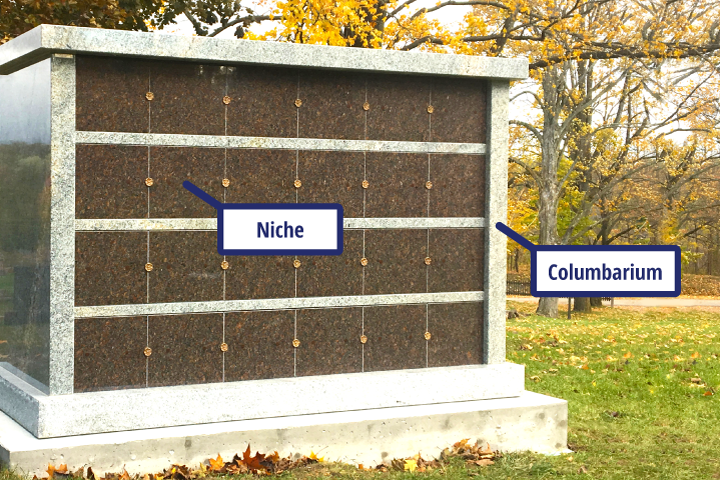
Choosing a Columbarium Niche: A Guide for Families Considering Cremation
For many families, a columbarium niche offers something meaningful: a permanent, dedicated resting p...
Jan 29, 2026