We're here to help in Vancouver —
(604) 857-5779
A Complete Guide to the Cremation Process
With Alternatives Funeral & Cremation Services
Understanding cremation
What It Means When Someone Is Cremated
When someone is cremated, their body is respectfully reduced to what we call cremated remains—a fine, powdery substance that families can keep, scatter, or bury according to their wishes. It's a process that many Canadians are now choosing, and for good reason: cremation offers flexibility, affordability, and the freedom to honour a loved one in deeply personal ways.
In Canada, cremation rates have climbed above 77% as of 2024, making it the most common choice for final disposition. This is especially true in the communities we serve—Metro Vancouver, the Fraser Valley, and Southern Saskatchewan—where families increasingly value options that align with their lifestyles, beliefs, and budgets. Whether you're planning ahead or navigating arrangements after a death occurs, understanding how cremation works can bring clarity during an overwhelming time.
At Alternatives Funeral & Cremation Services, we specialize in simple cremation, traditional funeral services, green burial options, and transparent pricing. This guide will walk you through every stage of the cremation process, from the moment your loved one comes into our care to when the cremated ashes are returned to the family.
What this guide covers:
- What cremation actually means and the types available in Canada
- Legal requirements and paperwork before cremation can proceed
- A step-by-step walkthrough of the entire process
- How we protect your loved one's identity throughout
- What can and cannot be cremated
- Options for cremated remains after the process
- Service choices from direct cremation to full ceremonies
- Costs, planning ahead, and grief support resources

What Is Cremation? (Definition & Types)
Cremation is a controlled process that uses intense heat or, in some cases, water-based chemistry to reduce the human body to bone fragments. These fragments are then processed into a fine, uniform powder—what most people refer to as ashes, cremated remains, or cremains. All three terms describe the same thing: the final result that families receive after the cremation process is complete.
The combustion process breaks down organic matter, leaving behind primarily calcium and minor minerals from the skeleton. For adults, the cremated remains typically weigh between 4 and 6 pounds, depending on the deceased person's bone density and body size.
Flame-Based Cremation (Most Common)
- Uses a cremation chamber (also called a retort) heated by natural gas or propane
- Operating temperatures typically range from 1,400°F to 1,800°F (760°C to 980°C)
- The process takes approximately 1.5 to 3 hours depending on body composition
- Highly regulated under provincial legislation in British Columbia and Saskatchewan
- Available at all crematories across Canada
Alkaline Hydrolysis (Water Cremation) - not available in British Columbia
- Uses a pressurized vessel with water and alkali solution instead of flame
- Operates at lower temperatures (around 350°F) but over a longer period
- Produces similar cremated remains to flame-based cremation
- Considered more environmentally friendly, with approximately 90% lower carbon emissions
- Currently available in select Canadian provinces where legally permitted
Both methods result in bone fragments that are processed to a consistent, sand-like texture before being placed in a cremation urn or temporary container for the family.
Legal Requirements & Paperwork Before Someone Is Cremated
Cremation cannot happen immediately after death. Provincial laws require specific waiting periods, permits, and authorizations before the cremation process can begin. In most cases, this means a delay of 48 hours after death, depending on local regulations.
Key documents required:
- Medical certificate information (completed by a physician or coroner)
- Cremation authorization form signed by the legal next of kin or executor
- Coroner or medical examiner clearance (if required by circumstances of death)
- Provincial cremation permit
Who can authorize cremation:
In British Columbia and Saskatchewan, authorization typically follows a legal hierarchy:
- Spouse or common-law partner
- Adult children
- Parents
- Siblings
- Executor named in a will
- Other relatives or representatives as defined by provincial law
It's important to know that embalming is not legally required for cremation in Canada. We typically recommend it only when families plan a public viewing, open-casket ceremony, or when there will be a significant delay before cremation.
At Alternatives, we handle the filing of permits, coordination with vital statistics offices, and compliance with provincial legislation. Our licensed funeral director team manages the necessary documents so families don't have to navigate complex paperwork during an already difficult time. If you have questions about what's required, we're always available to explain each step.
From Death to Cremation: Step-by-Step Process
Understanding what happens between the moment of death and the completion of cremation can ease uncertainty for many families. While every situation has its own timeline, most families in our service areas receive their loved one's cremated remains within 7 to 10 days of the initial call—sometimes faster, sometimes a bit longer depending on paperwork and scheduling.
Throughout every step, Alternatives follows a strict chain-of-identification protocol. This ensures the family can be confident they are receiving the correct cremated remains when the process is complete.
Transportation and Initial Care
When death occurs—whether at home, in a hospital, care facility, hospice, or coroner's office—our team responds promptly to transfer your loved one into our care. In Metro Vancouver, the Fraser Valley, and Southern Saskatchewan, removals typically occur within a couple of hours of being called, day or night.
Initial identification steps include:
- Checking hospital or facility ID bands
- Assigning an internal identification number
- Creating a file with the deceased's legal name, date of birth, and other relevant details
- Beginning the chain-of-custody documentation
The deceased body is transported in a professional, dignified manner to our funeral home or partner crematorium. Families may choose to see their loved one at our facility before cremation if they wish—this is entirely a matter of personal and cultural preference.
Storage and Waiting Period
While paperwork is completed and the legal waiting period elapses (often at least 48 hours after death), your loved one is securely sheltered.
During this time, our team:
- Confirms all required documents are in order
- Verifies death registration information
- Reviews the cremation authorization form
- Checks for special instructions (religious rites, viewing requests, specific clothing)
- Obtains any outstanding permits
Key safeguards during storage:
- Temperature-controlled environment maintained at all times
- Access restricted to authorized staff only
- Identification tags remain with the deceased
- Log entries document all movements and status changes
Families can contact us at any point during this waiting period for updates or to adjust service plans—for example, adding a small farewell gathering.
Preparing the Body Before Cremation
Before cremation, the body is prepared with care and respect. This preparation varies depending on whether the family has requested a viewing, but even with direct cremation, basic dignified handling is standard.
Items that must be removed prior to cremation:
| Item | Reason for Removal |
|---|---|
| Pacemakers and defibrillators | Can explode at very high temperatures |
| Battery-operated medical devices | Explosion and equipment damage risk |
| Surgical implants (some types) | May need to be carefully removed |
| Jewelry and watches | Returned to family unless otherwise requested |
| Personal items with batteries | Safety hazard in cremation chamber |
Jewelry, keepsakes, and other personal items are typically removed and returned to the family. If a family specifically requests that a safe item remain with their loved one, we discuss what's possible on a case-by-case basis.
If embalming is chosen, it is performed by a licensed funeral director. Families might opt for embalming when planning an open-casket viewing, when there's a delay before cremation, or when transport from another province or country is involved.
The Cremation Chamber (Retort) and Technical Details
The cremation chamber—also called a retort or crematorium chamber—is an industrial-grade unit lined with refractory brick, designed to withstand extreme temperatures. Most retorts are fueled by natural gas.
The deceased is placed in a cremation container rather than a standard casket. This container is typically reinforced cardboard or simple wood. Some families do choose a wooden casket for the cremation, particularly if they've held a traditional service beforehand.
Technical specifications:
- Operating temperature: approximately 1,400°F to 1,800°F (760°C to 980°C)
- Duration: 1.5 to 3 hours depending on body size, composition, and equipment
- One body present in the chamber at a time (legally required)
- Computer-monitored for temperature, timing, and emissions
Processing and Handling the Cremated Remains
After a cooling period of several hours, bone fragments are carefully removed from the crematorium chamber and placed on a dedicated processing surface.
Processing steps:
- Metal from medical devices, surgical implants, dental work, or joint replacements is separated using magnets and manual inspection
- Recovered metals are typically sent for recycling where permitted
- Remaining bone fragments are placed in a machine called a cremulator or processor
- The cremulator reduces fragments to a uniform, fine consistency
What families can expect:
| Characteristic | Typical Range |
|---|---|
| Weight of cremated remains | 4–6 pounds (1.8–2.7 kg) for adults |
| Colour | White to grey (varies naturally) |
| Texture | Fine, sand-like particles |
| Volume | Approximately 200 cubic inches |
At Alternatives, the identification disc or ID tag stays with the remains through every step of processing. This tag is placed with the ashes in the container or urn before being returned to the family.
Identity Protection: How We Ensure You Receive the Correct Cremated Remains
Human cremation is irreversible, which is why strict identity safeguards are central to our process. From the moment we receive your loved one into our care until the cremated remains are back with the family, we maintain a clear chain of custody.
Our identification protocol includes:
- Initial ID verification at transfer (hospital bands, legal documents, next of kin confirmation)
- Assignment of internal case number that follows the deceased through every stage
- Placement of a metal or heat-resistant ID tag that remains with the deceased's identity throughout cremation
- Log entries documenting every movement, inspection, and processing step
- Final verification before release to family members
Additional safeguards:
- Only one person is cremated in a chamber at a time, as required by law and industry standards
- Crematorium staff follow strict guidelines at every stage
- Families may request to witness the start of cremation at some facilities (subject to scheduling and local rules)
- We can walk families through our exact identification process step by step upon request
If you have concerns about identity protection or want additional reassurance, our funeral director team is happy to explain our protocols in detail. Transparency is fundamental to how we operate.
What Can (and Cannot) Be Cremated
For safety and equipment protection, certain items must be removed prior to cremation. Our team handles this process respectfully and returns appropriate items to families.
Items that must be removed:
- Pacemakers and implantable defibrillators (explosion risk)
- Battery-operated devices (hearing aids with batteries, insulin pumps)
- Some prosthetic devices with mechanical components
Items typically removed and returned to family:
- Jewelry, rings, watches
- Eyeglasses
- Keepsakes and mementos
Items generally permitted:
- Clothing (natural fabrics preferred)
- Soft personal items (letters, photographs, small cloth items)
- Religious or cultural items (discuss specifics with your funeral director)
Items that may be limited or removed:
- Shoes (especially those with thick rubber soles)
- Belts with large metal buckles
- Hard plastics
- Glass items
If you want specific personal items to remain with your loved one during cremation, please discuss this with your funeral director beforehand. We review each request individually to confirm what's safe and possible.
After Someone Is Cremated: Options for Cremated Remains
Once the cremation process is complete, families decide how and where to place their loved one's cremated remains. There's no single "right" choice—the decision can be as simple or elaborate as you wish, guided by the deceased's wishes, your family's traditions, or your own sense of what feels meaningful.
Common options for cremated remains:
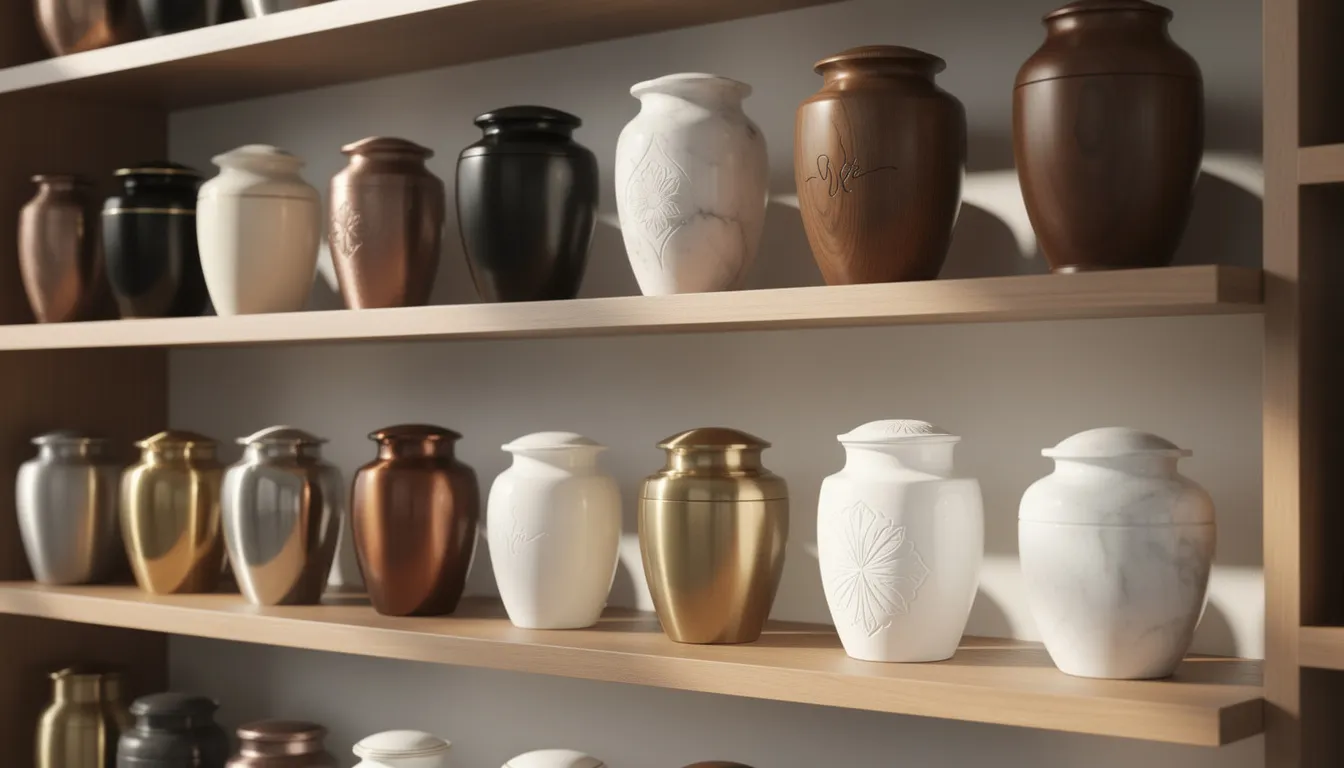
- Keeping at home — Placing the urn on a mantle, shelf, or in a special location
- Cemetery burial — Interring the urn in a family plot or cremation garden
- Columbarium niche — Placing the urn in a dedicated memorial structure
- Scattering — Dispersing ashes at a meaningful location (where legally permitted)
- Dividing among family members — Using keepsake urns to share remains
- Memorial jewelry — Incorporating a small portion into wearable keepsakes
Eco-conscious options:
- Biodegradable urns for ground or water scattering
- Integration into memorial trees or natural plantings
- Green burial plots designed for cremated remains
- Scattering at a sacred site or private property (with appropriate permissions)
At Alternatives, we can help plan a graveside service, celebration of life, or traditional memorial service with the urn present. Many families find comfort in holding a gathering weeks or even months after cremation, once they've had time to process their loss and plan a meaningful tribute.
Cremation & funeral service options
Service Choices: From Simple Cremation to Full Funeral
Cremation is just one part of the overall farewell. The ceremony—or choice to have no formal ceremony at all—is entirely up to you and your family.
Direct Cremation (Simple Cremation)


- No formal service before cremation
- Minimal ceremony and handling
- Lower cost option
- Quick return of cremated remains (often within 5–7 business days)
- Families may hold a private gathering later if desired
Traditional Funeral with Cremation
- Visitation, viewing, or funeral service with the body present in a casket
- Can include religious or cultural rituals
- Cremation follows the service
- Cremated remains may then be buried, scattered, or kept at home
- Embalming often recommended if there's an open-casket viewing
Celebration of Life / Memorial Service
- Often held days or weeks after cremation
- Urn may be present alongside photos, flowers, and personal tributes
- Focus on celebrating the deceased person's life and legacy
- Can be held at our facility, a family home, community space, or outdoor location
- Flexible format—as formal or casual as the family decides
Graveside Service for Cremated Remains
- Short committal service at the cemetery or cremation garden
- Burial of the urn in a family plot or designated area
- May include prayers, readings, or simple words from the family
- Option for green burial of biodegradable urn
Green and Eco-Friendly Options
- Natural burial of cremated remains in conservation areas
- Biodegradable containers and urns
- Tree planting memorials
- Minimal environmental footprint throughout the funeral process
At Alternatives Funeral & Cremation Services, we work with families to design services that reflect their values, budget, and cultural or religious beliefs. Whether you choose a simple cremation with no ceremony or a multi-day traditional burial and memorial, we're here to help.
Costs, Transparency, and Planning Ahead
One of the most common concerns families have about funeral services is cost—and whether they'll encounter unexpected charges. At Alternatives, we believe in complete transparency from the first conversation.
| Service Type | Relative Cost | What's Included |
|---|---|---|
| Direct cremation | Lowest | Basic transfer, cremation, temporary container, permits |
| Cremation with memorial service | Moderate | Above plus facility use, staff coordination, urn |
| Traditional funeral with cremation | Higher | Visitation, embalming, casket rental, service, cremation |
| Traditional burial | Highest | Casket, burial plot, grave opening, monument |
How we provide transparency:
- Itemized, written estimates before any services begin
- All mandatory charges clearly explained (cremation fee, permits, basic container)
- No hidden fees or surprise additions
- Clear explanation of what's required versus what's optional
- General price list available upon request
Planning ahead:
Many families find peace of mind by arranging cremation or funeral services in advance. Preplanning allows you to:
- Make decisions without time pressure
- Lock in current prices
- Document your wishes clearly
- Reduce the burden on family members at the time of death
- Explore payment options at your own pace
We offer no-obligation planning conversations by phone, online, or in person. If you're considering your options for yourself or a loved one, we're happy to answer questions and provide information without any pressure.
Grief Support and Next Steps After Cremation
Even when all the practical details are complete and your loved one has been cremated, grief continues. There's no timeline for healing, and everyone experiences loss differently.
At Alternatives, we don't consider our role finished when we return the cremated remains. We can provide referrals to grief support resources throughout Metro Vancouver, the Fraser Valley, and Southern Saskatchewan:
- Local grief support groups and counseling services
- Online communities and virtual support programs
- Faith-based resources and pastoral care
- Bereavement literature and recommended reading
Tangible next steps some families find helpful:
- Planning a memorial gathering for a significant date (birthday, anniversary)
- Creating a memory book with photos, stories, and mementos
- Choosing a permanent urn or memorial site
- Planting a tree or establishing a living memorial
- Writing letters to your loved one
- Marking the first year's milestones with small rituals
If you're unsure how to honour your loved one's wishes or navigate family dynamics around the loved one's cremated remains, our staff are available to help. Sometimes a brief conversation can provide clarity about options you hadn't considered.
There is no right timeline for grief. Practical guidance and emotional support are both available—whether you're researching cremation options, planning ahead for yourself, or processing a recent loss.
If you have questions about the cremation process, our service offerings, or how to begin planning, the team at Alternatives Funeral & Cremation Services is here to help. Reach out by phone, email, or through our website to start a conversation. We're honoured to serve families throughout Metro Vancouver, the Fraser Valley, and Southern Saskatchewan with compassionate, transparent care.
Steady support is within reach
Compassionate, transparent cremation & funeral services